Light Therapy Photobiomodulation
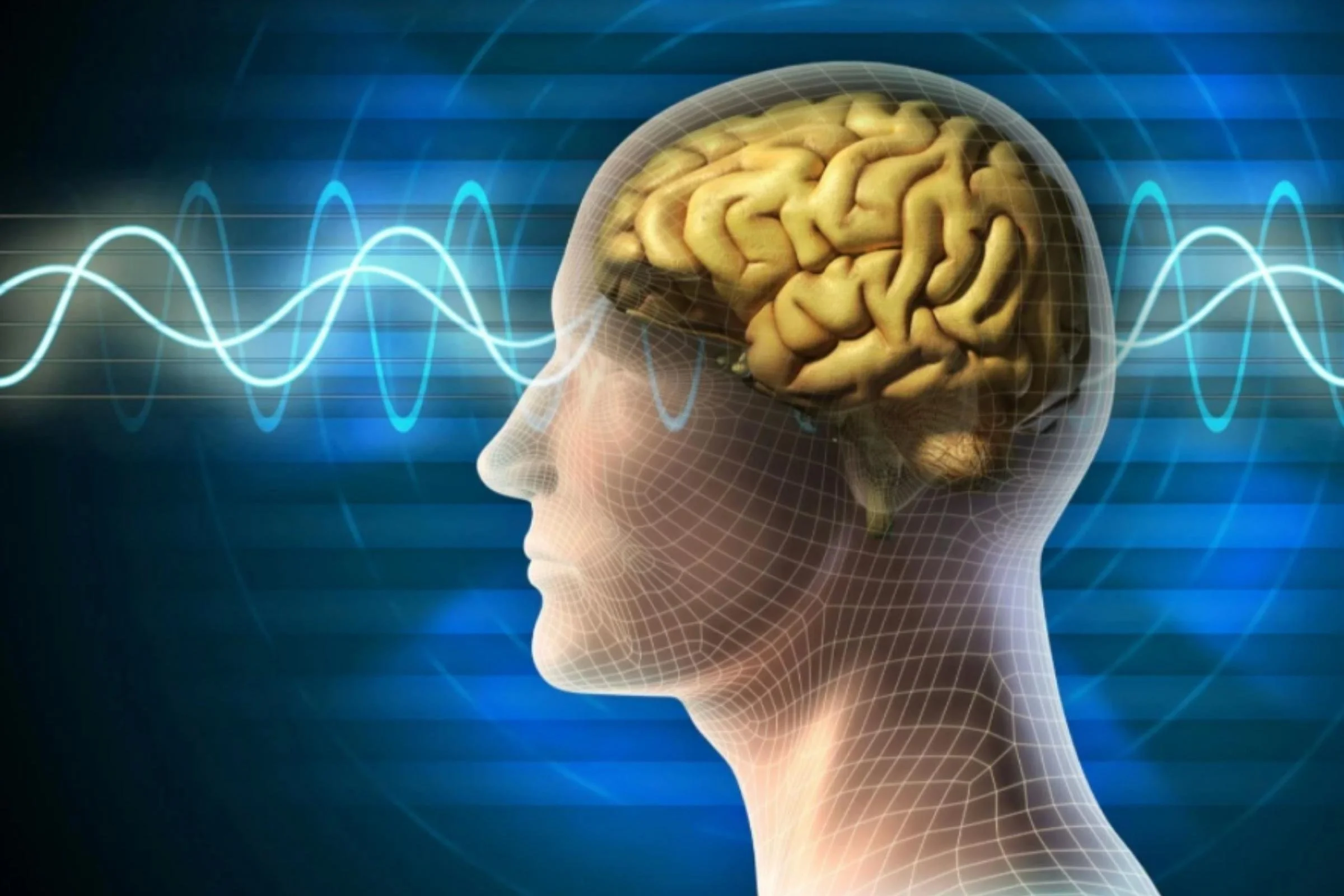
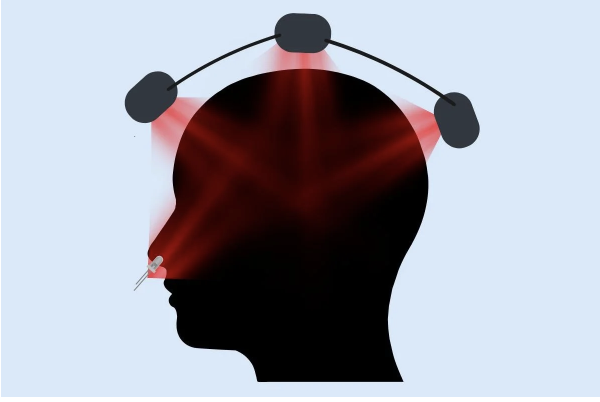
Light Therapy, specifically photobiomodulation, is a new potential treatment being researched for concussions, repetitive subconcussive head impacts, and longer-term neurodegeneration, including mild cognitive impairment and dementia/Alzheimers. The photobiomodulation devices use light-emitting diodes (LEDs) to deliver near-infrared light through the skull and, in some devices, through the nostril or eyes.
Photobiomodulation research
Below are some of our blog posts on recent photobiomodulation research; read more in our Latest Research section.
Light Therapy Promotes Neurological Resilience in College Football Players
At-home transcranial photobiomodulation (light therapy) improves cognitive function for adults exposed to repetitive head acceleration events
Significant improvements in 4 former football players with possible CTE: transcranial photobiomodulation case studies
Photobiomodulation improves neuromuscular deficits related to concussions and repetitive head impacts
Study finds low-level light therapy results in increased brain connectivity within the first 2-3 weeks of moderate traumatic brain injury

Light therapy produces improvements in brain structure & function in hockey player with persistent post-concussion symptoms

The VA Boston Healthcare System previously had a clinical light therapy program for veterans with mTBI through their Center for Compassionate Care Innovation. The program has been so successful that it was presented at the VA’s 2020 Veteran Patient Experience Symposium.
How does photobiomodulation work, and is it safe?
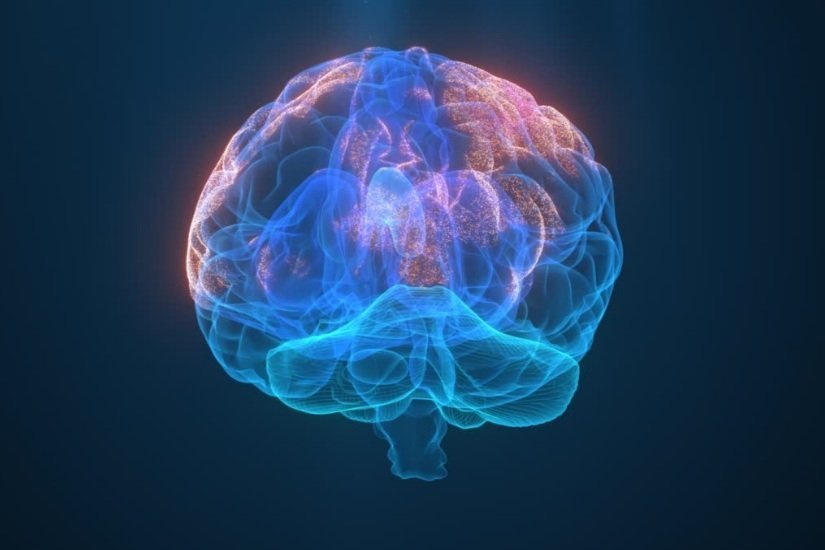
Research indicates that near-infrared (NIR) light applied to the brain through the skull has numerous positive effects. The effects include increased cerebral blood flow, increased ATP energy production, increased neuroprotection and brain repair, and reduced inflammation. A 2019 study found that using light therapy applied to the head has a positive effect on brain wave patterns in just one treatment; read more about the study here.
A series of case studies and small clinical trials have shown light therapy to be helpful for persistent post-concussion symptoms. See our section on the science behind LED light therapy for mild traumatic brain injury.
In terms of safety, the light therapy devices used in research emit non-ionizing forms of light. Non-ionizing light does not carry enough energy to break molecular bonds and ionize atoms. Researchers and clinicians advise against the home use of light devices that are not part of current research studies. Note that some of the devices used in research are available for purchase online; see the next section.
There is no information about the effectiveness of light therapy devices that are not being used in research. Different light devices have different outputs, which will have unknown effects. There is potential for harm with the use of untested light therapy devices to treat something as vulnerable as the brain.
How to access photobiomodulation devices
Photobiomodulation (PBM) for the brain is still in the research stage. We recommend using devices currently used in brain PBM research; some are available for purchase online. Two distinguishing characteristics of different devices are the wavelengths and pulse rates they deliver.
Broadly, the wavelengths being researched for brain health are near-infrared wavelengths: 810 nanometers (nm) and 1070 nm; some devices deliver 810 nm, and others deliver 1070 nm. In terms of pulse rates, different devices offer options such as continuous (no pulse), 10 Hz, or 40 Hz. The 10 Hz pulse PBM modulates Alpha brain waves, which are associated with relaxation, and the 40 Hz pulse PBM modulates Gamma brain waves, which are associated with cognition, learning, and memory.
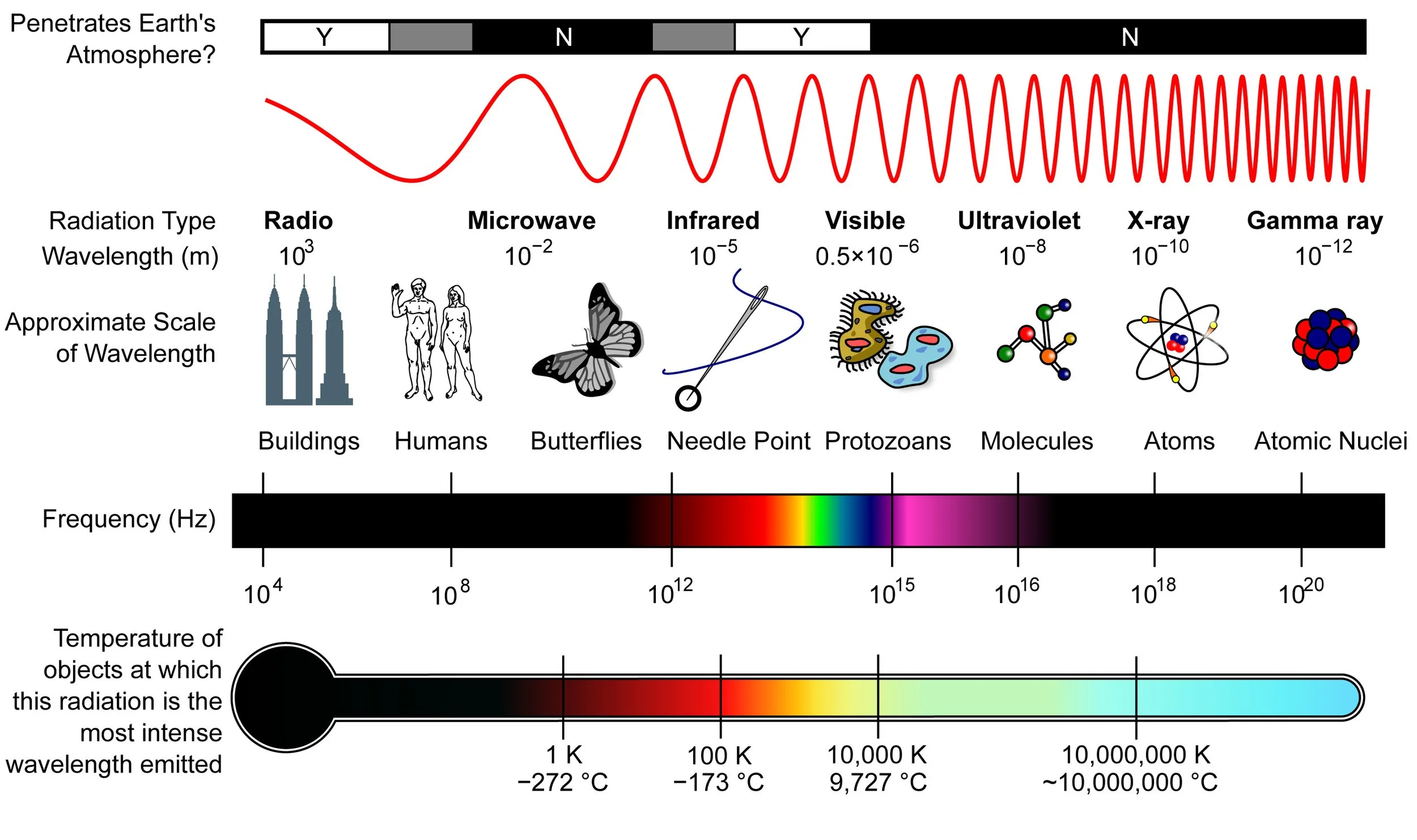
The author of this image is attributed here.
Vielight, Neuronic, and CeraThrive are companies that sell brain PBM devices online for under $2,000. Vielight is far more involved in brain-related PBM research than the other two companies. Cognito Therapeutics is developing a device for mild-to-moderate Alzheimer's; we understand that it will eventually be available by prescription.
Vielight

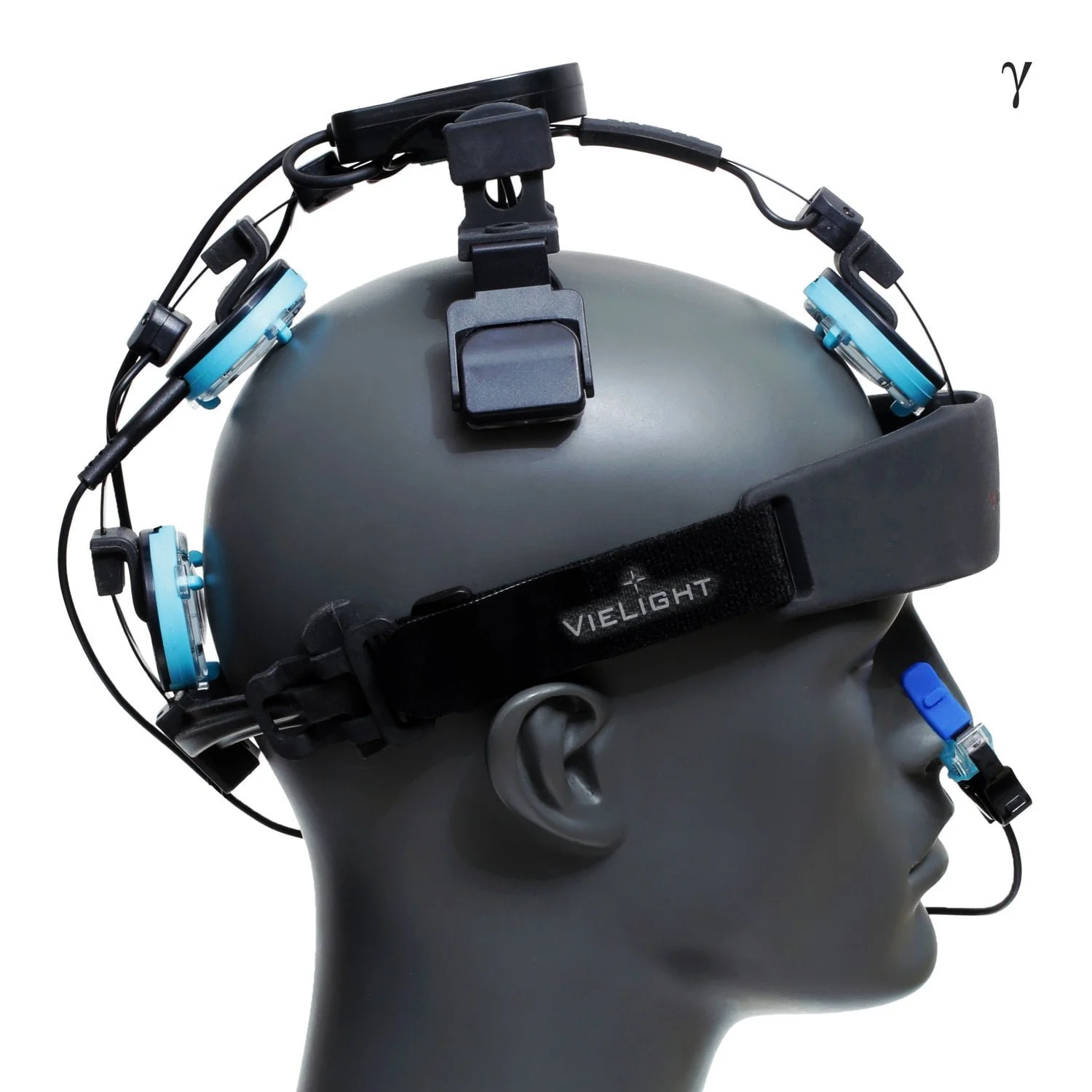
Of the companies producing brain photobiomodulation (PBM) devices available for purchase online, Vielight is by far the company most involved in research.
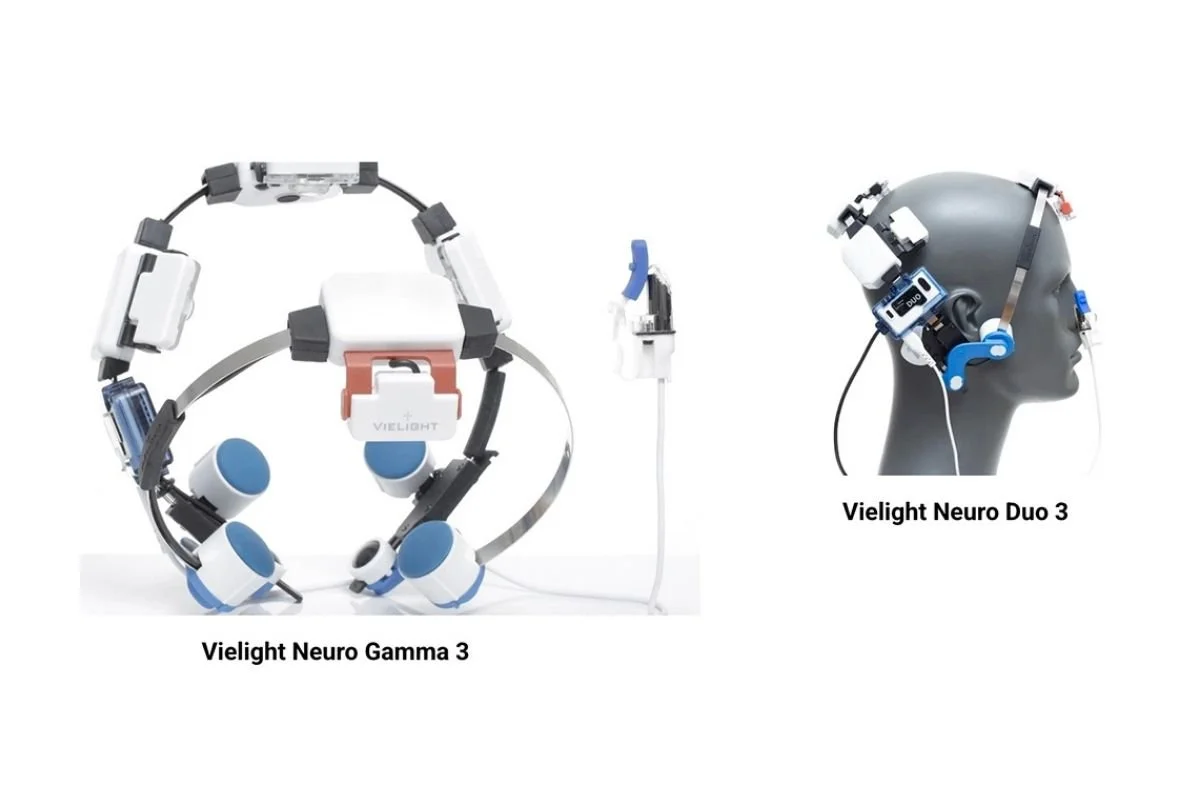
Vielight devices exclusively deliver 810 nm near-infrared light. The Vielight devices include a headset and a nasal clip; the latter delivers PBM to the structures within the brain’s core, which have functions such as long-term memory and hormonal regulation. Most research studies began before the Vielight redesign (the Neuro 4 series), but the current devices deliver the same type of near-infrared light as earlier models used in research. Models are available that deliver 10 Hz (Neuro Alpha) or 40 Hz (Neuro Gamma), or that allow the user to toggle between 10 Hz and 40 Hz sessions (Neuro Duo).
A significant proportion of recent studies have used the Neuro Gamma (40 Hz). The VA Boston Healthcare System Center for Compassionate Care program for veterans with PTSD used the Neuro Alpha. An upcoming study will use the Neuro Duo, i.e., the study will involve both Alpha and Gamma pulse rates.
Neuronic

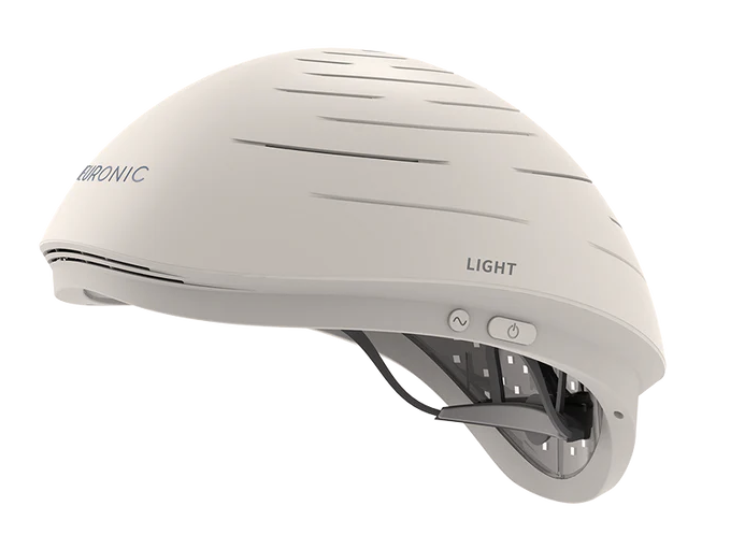
The Neuronic delivers 1070 nm near-infrared light via a bicycle helmet-looking device. They have been involved in three published research studies that investigated cognitive performance, anxiety and depression, and Covid-19 brain fog. The Neuronic devices allow the user to toggle between sessions at continuous (non-pulsed), 10 Hz, and 40 Hz.
CeraThrive
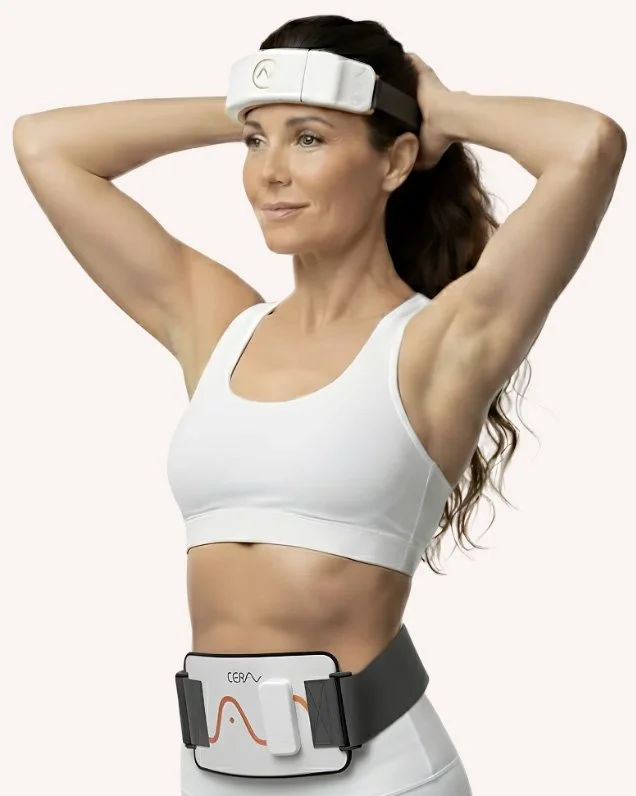
The CeraThrive device is designed for “gut-brain” optimization, delivering near-infrared and red light via PBM pads on the abdomen and forehead; it is intended to treat a range of neurodegenerative conditions, including ALS and Parkinson’s. They have completed one study that has not been published in a medical journal.
Cognito Therapeutics
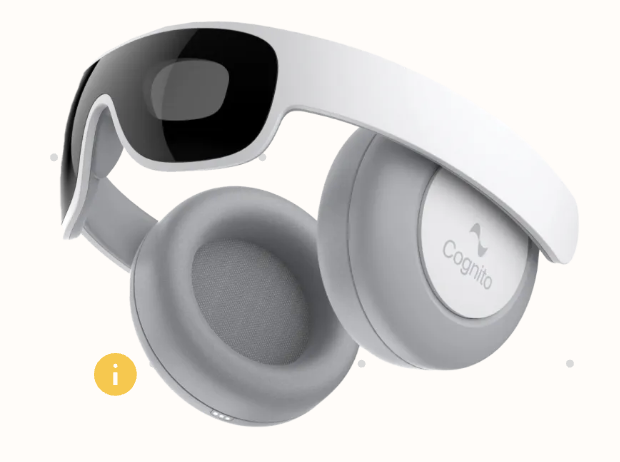
Cognitive Therapeutics has developed the Spectris AD device that delivers 40 Hz light to the eyes via goggles and 40 Hz sound via a headset. Spectris AD was selected for the FDA Breakthrough Device Designation for the treatment of mild-to-moderate Alzheimer’s disease. The company has completed a feasibility study and is currently running a randomized pivotal trial. The intention is for the Spectris AD to be a device available by prescription.
The science behind LED light therapy for mild traumatic brain injury
Regulation of the Default Mode Network and other brain networks
See our blog posts about the latest research for the most up-to-date information.
Research is finding that concussions cause several networks of the brain to become dysregulated, meaning that regions of the brain are not in sync. Researchers use diffusion MRI to map structural damage to these intrinsic connectivity networks caused by concussions. Studies have found that concussions cause diffuse axonal injury, which "produces neurological impairment by disconnecting brain networks."
A 2019 study found that one treatment using the Vielight Neuro Gamma headset positively modulated brain waves. Read about the Default Mode Network (DMN) and light therapy in the 2019 article in Vielight for more information.
A 2018 study found that light therapy improves brain connectivity and cognition; the study discusses the Default Mode Network.
A 2012 study looked at patients with a sports-related concussion. While the concussion patients were resting, they had normal function in the Default Mode Network. But when the concussion patients did light aerobic activity, their Default Mode Network became dysregulated.
To learn the origins of research on photobiomodulation for the brain, see A history of research into light therapy as a potential treatment.
Additional positive effects of light therapy on the injured brain
Laboratory studies have found that light therapy (with red and near-infrared light (810nm) light) increases the ATP (or energy production) in hypoxic cells. Hypoxic cells are cells that lack oxygen due to injury or disease.
Studies with humans (in 2009, 2012, 2019, and another in 2019) have found that light therapy widens blood vessels (vasodilation), thus increasing blood flow, in limited, specific areas in the brain. This increased blood flow is related to an enzyme in the mitochondria (the cells’ “powerhouse”) getting rid of toxic nitric oxide due to increased vasodilation.
We recommend the article What is Photobiomodulation for technical explanations of how this therapy works. We also suggest the 2017 article “Photobiomodulation for traumatic brain injury and stroke” and the 2016 article “Shining light on the head: Photobiomodulation for brain disorders,” both by Michael E. Hamblin.
Background on the use of light therapy
Photobiomodulation Therapy, using Low-Level Laser or LED Light Therapy devices, has been used for over 50 years. These medical light therapy devices have been successfully used to enhance wound healing and treat musculoskeletal conditions.
Although larger-scale research studies are needed, the past 2 decades of clinical and research results on photobiomodulation for the brain show promise:
Photobiomodulation for the brain is safe, based on 15 years of clinical application and 10 years of research.
It is an excellent "adjunctive" therapy. Light appears to enhance other clinical therapies such as occupational therapy, physical therapy, and craniosacral therapy.
Researchers recommend it as a first-line treatment – there is some indication that the sooner the treatment is started, the better.
Read about the latest research


This article is for information purposes only. No medical claims are made. By providing the information contained herein, we are not diagnosing, treating, curing, mitigating, or preventing disease or medical condition. Before beginning any treatment regimen, it is advisable to seek the advice of a licensed healthcare professional.
In an interview, RJ discusses his potential CTE and his positive experience as a participant in a University of Utah photobiomodulation (light therapy) study. RJ played high school and college football, experiencing repetitive head impacts and multiple concussions.